Do-Along STEM · Book 1
Gabi and the Sandwich Robot
A Do-Along STEM Book About Algorithms
Meet the job Computer scientist
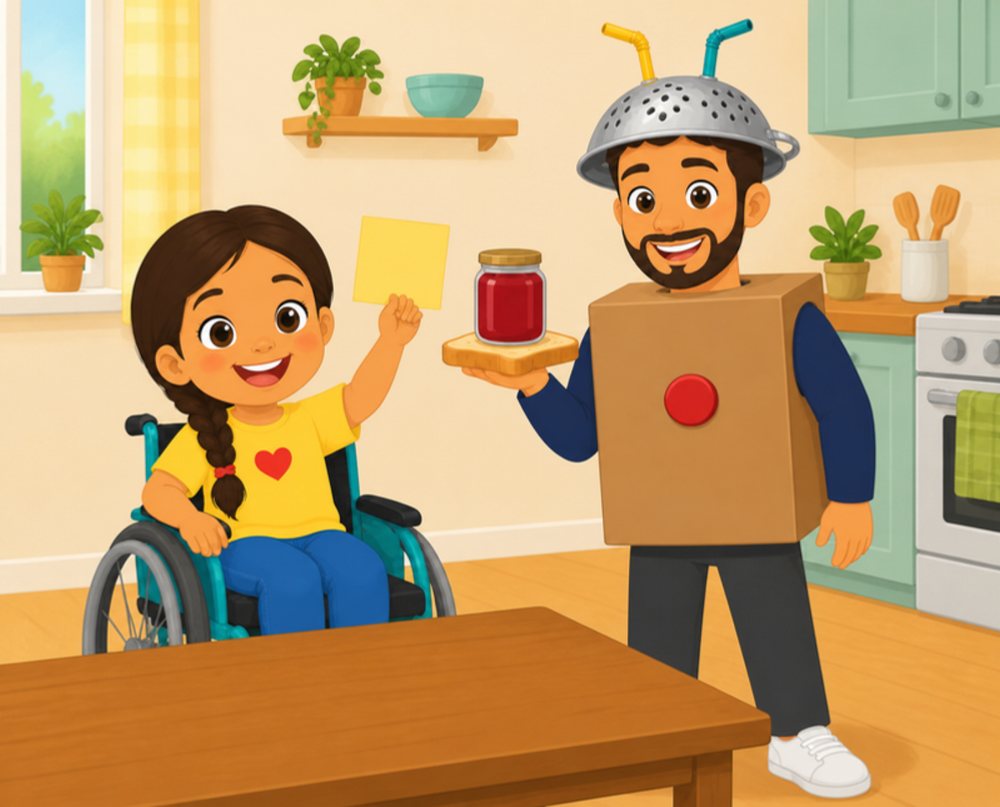
It’s Saturday, and Gabi is hungry. Her dad clanks in as Papi-Bot, a cardboard robot who can make anything, but only does exactly what the steps say. Gabi’s first try ends with a whole jam jar on top of the bread bag. Then she makes command cards, hunts down the bugs, and learns what computer scientists call an algorithm.
Coming soon on Amazon Play Sandwich-Bot
Get the book
-
The paperback
The printed book is coming soon on Amazon.
Coming soon on Amazon -
Printable command cards
Eight cards to cut out, two blanks, and the robot cheat sheet for grown-ups.
Download
What you need
- 4 slices of bread (enough for two tries)
- A jar of any spread your family can eat: jam, sunflower butter, cream cheese or hummus
- A butter knife or a spoon
- A plate
- The 8 command cards from page 31, or sticky notes and a marker
- Clean hands and a clear table
Time: 20 to 30 minutesMess: lowAges: 5 to 8
Your job: be the robot
- Do exactly what the step says. No more. No less.
- Don’t guess what your programmer meant.
- Can’t do a step? Freeze and say, “ERROR! Does not compute.”
- Be silly, not messy. Only the robot holds the knife.
Reading with a class? You are the robot. The class is the programming team. Write their steps on the board and run them at the front.
Peek inside
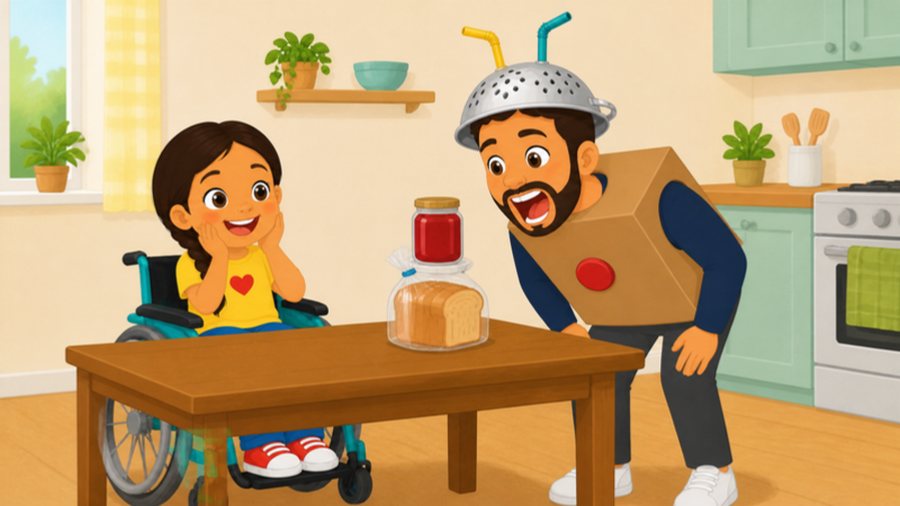
Papi-Bot follows Gabi’s first three steps exactly: the whole jam jar on top of the whole bread bag.
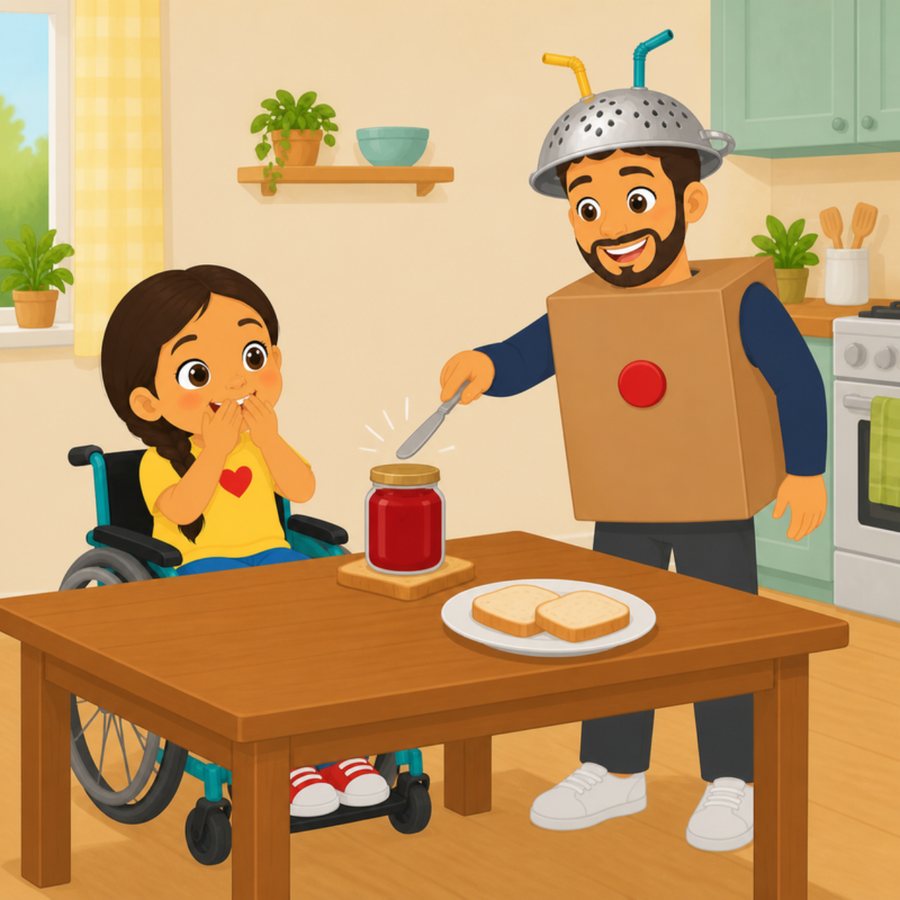
CLONK, CLONK. The lid is on! Gabi has found her first bug.
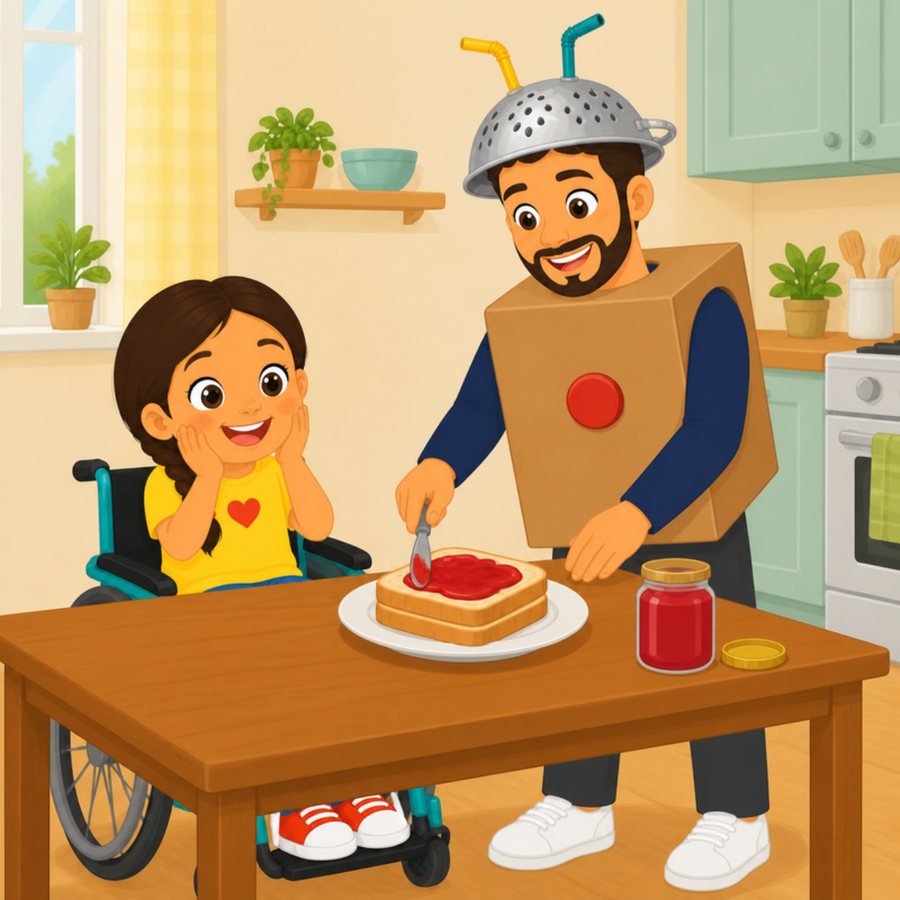
All the steps are there, but two are in the wrong order. One very sticky sandwich.
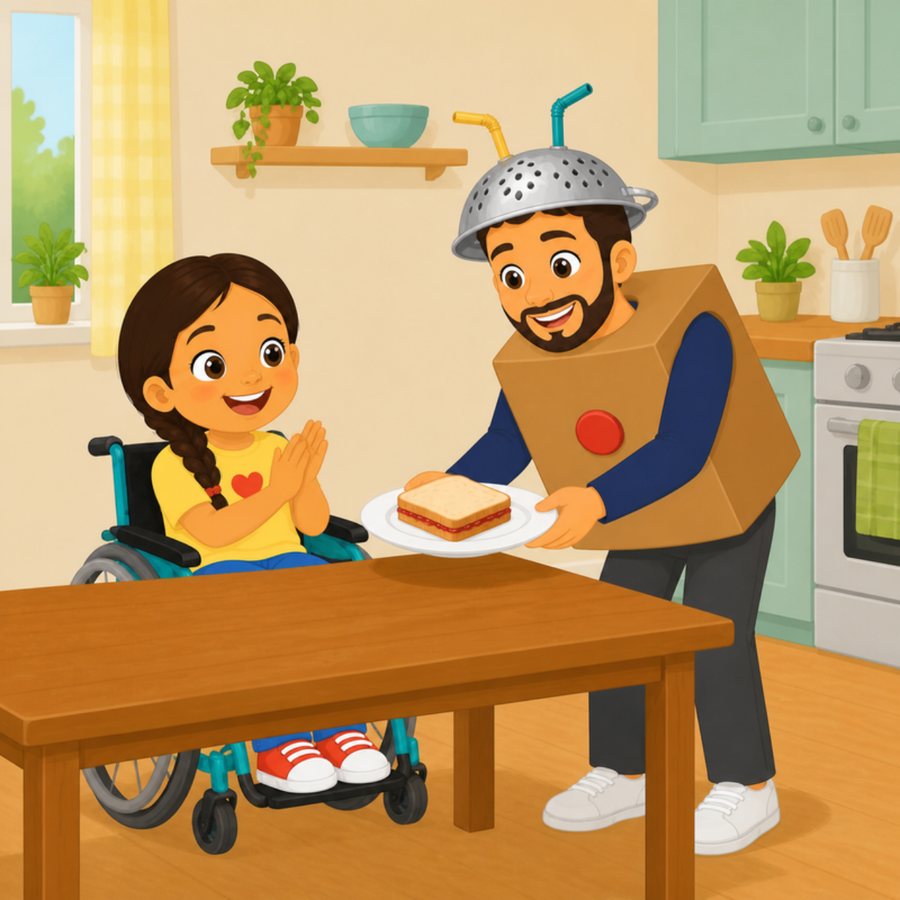
From the top! The best sandwich a robot ever made.

Play Sandwich-Bot
After the book, children can program Papi-Bot on screen. They tap the same command cards into a program, press Run, and watch him follow it exactly, bugs and all. There are three levels from the book and a free play mode.
Works on tablets, phones and computers. Nothing to install, nothing to sign up for.
For teachers
The computer science skills children practice in this book:
- ALGORITHMS Make and follow a list of steps that gets a job done.
- IN ORDER Break a job into small, exact steps, in the right order.
- DEBUGGING Find the mistake in a list of steps, fix it and test again.
What do computer scientists do?
They work out the steps that tell computers what to do. Then they test the steps, find the bugs and fix them. Just like you did.
Did you know? In 1947, people working on a giant computer found a real moth stuck inside it. They taped the bug into their notebook! Source: History of Information: the first computer bug, 1947
Story and activities: Dr. Shane Wines.